Overturning and Climate Lab
Overview
Welcome to the Overturning and Climate Lab (OCLIM) at the College of Marine Science of the University of South Florida! Our research focuses on understanding the dynamics of large-scale ocean circulation and its impact on climate variability and change. We combine observational data, numerical modeling, and theoretical approaches to investigate circulations such as the Atlantic Meridional Overturning Circulation (AMOC) and Subtropical Cells (STCs). Our team is actively involved in international programs and collaborations to advance knowledge of ocean circulation and climate.
People
-
 Dr. Yao Fu
Email: yaofu@usf.edu -
 Sarah Campbell
Master Student
Research: STC loop variability and STC-AMOC interaction -
 Bryant Pollard II
Undergraduate Research Assistant
Research: AI-based AMOC reconstruction and prediction - Luke Dorrian
Undergraduate Research Assistant
Georgia Tech, now at Scripps Institution of Oceanography - Bikram Singh
REU Student
Rice University, now at ERM
Assistant Professor
Graduate Students
Undergraduate Students
Former Students
Research Interests
AMOC
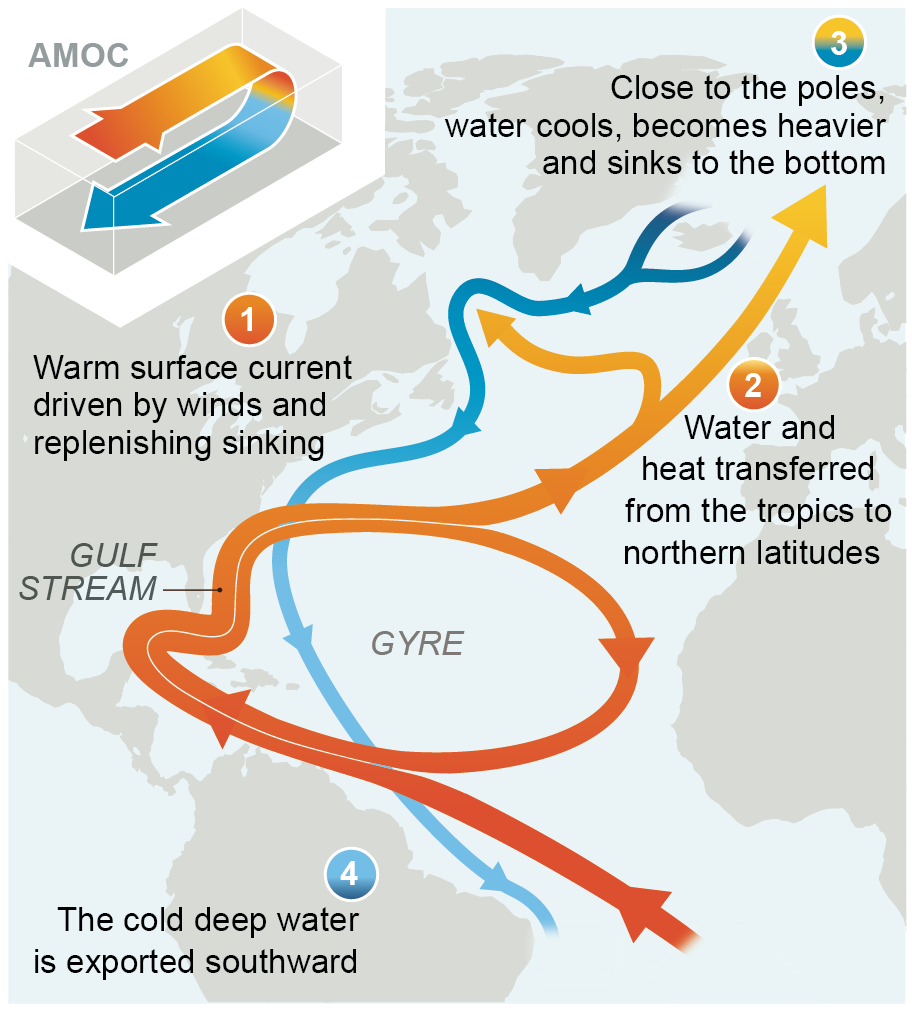
The Atlantic Meridional Overturning Circulation (AMOC) is a crucial component of the Earth's climate system. It plays a key role in redistributing heat, freshwater, oxygen, carbon, and nutrients on a global scale. Therefore, the AMOC is vital for maintaining the global climate and weather patterns, as well as marine ecosystems. Our lab focuses on understanding the dynamics of the AMOC and its impact on climate variability and change using a combination of observational and numerical modeling data. We habe been actively involved in the the Overturning in the Subpolar North Atlantic Program (OSNAP) to measure the subpolar AMOC variability and to understand its mechanisms.
Subtropical Cells (STCs)
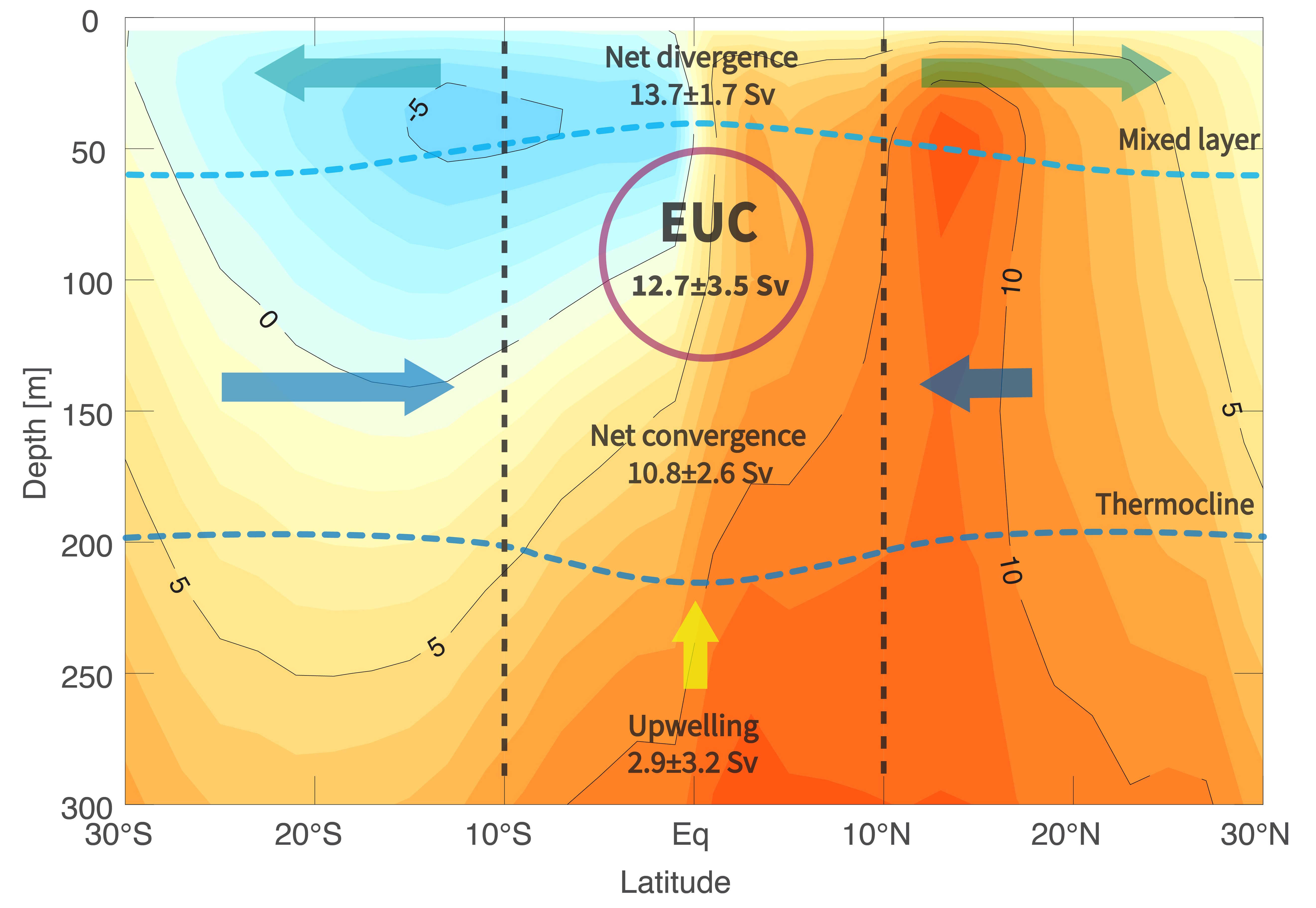
The STCs are wind-driven shallow overturning cells in the upper 500 m of the water column. They consist of a poleward flow in the mixed layer forced by the trade winds, and equatorward return flow in the thermocline as a result of Ekman pumping in the subtropical gyres. The thermocline STC transports supply the Equatorial Undercurrent (EUC), which brings water eastward to supply the eastern tropical upwelling. The STC loop system thus plays an important role in ventilating the thermocline and regulating the tropical climate variability. Our lab investigates the dynamics of the STC loop, its interaction with the AMOC, and its role in a changing climate.